
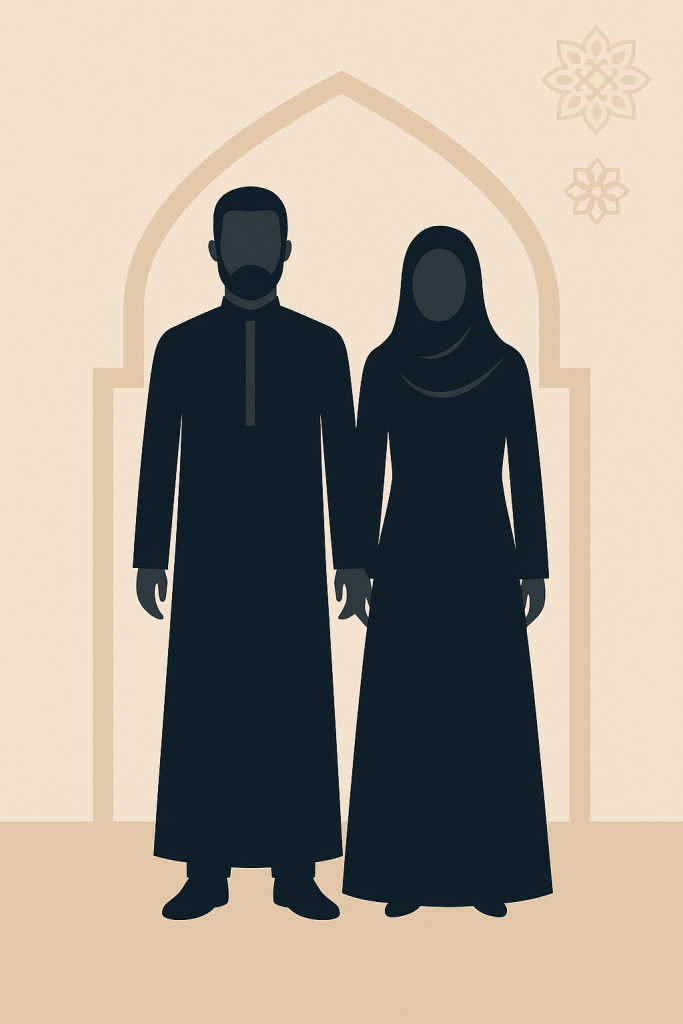
Why Dress Code Matters
Clothing at work is not just about appearance — it represents respect, professionalism, and values. In Islam, modesty (ḥayā’) is a defining characteristic for both men and women. A respectful dress code allows employees to honor their faith, their culture, and their colleagues.
The Prophet Muhammad ﷺ said:
“Every religion has a distinct characteristic, and the characteristic of Islam is modesty (ḥayā’).”
— Reported by Ibn Mājah, authenticated by Al-Albānī
A sound dress code policy:
Preserves dignity and self-respect. Prevents distractions and inappropriate appearances. Encourages respect and comfort between genders. Aligns Islamic values with workplace professionalism.
Traditional Clothing & Cultural Respect
Traditional garments such as the thobe, bisht, abaya, hijab, or kufi are not only culturally significant but also aligned with Islamic principles of modesty. When worn in the workplace, they project professionalism and religious commitment, while reinforcing mutual respect.
Guidelines for Men
Wear modest, neat, full clothing that does not reveal the body. Avoid transparent, sleeveless, or overly tight garments. Maintain cleanliness, as Islam emphasizes purity: “Indeed, Allah loves those who purify themselves.” (Qur’an 9:108) Shoes should be clean and professional. Use perfume with moderation; avoid excessive scents.
Guidelines for Women
Clothing must provide proper coverage and avoid transparency or tightness. Dresses, skirts, or trousers should extend below the knee; necklines should remain conservative. Hijab or abaya (where applicable) reflects Islamic modesty and professional respect. Makeup and perfume should be moderate; excessive adornment in mixed settings conflicts with modesty. Accessories should be simple and not distracting. Footwear must be professional and comfortable.
Perfume, Makeup & Accessories
Islam teaches balance: “And do not be excessive. Indeed, He does not like those who commit excess.” (Qur’an 7:31)
This principle applies to attire, perfume, makeup, and jewelry. In the workplace, moderation sustains professionalism while respecting Islamic values and colleagues’ comfort.
Key Takeaway
Dress codes are not merely organizational rules. They reflect dignity, professionalism, and the Islamic principle of modesty. By embracing these values — through traditional garments or modest modern styles — employees help build workplaces rooted in trust, unity, and productivity.
Task Hero Insight: True professionalism blends appearance with behavior. In Islam, modesty is not just a rule — it is a value that strengthens trust and respect.
 Main Page
Leave a comment